Compared with undergoing assisted reproductive treatment domestically, third-generation IVF in Thailand has become an option for many families considering fertility treatment abroad, thanks to its standardized procedures, established screening system, and flexible treatment schedules. Families trying overseas IVF for the first time are often unfamiliar with the specific steps involved, which can lead to confusion during the process. To help you better understand how IVF treatment in Thailand works, Jiabaolibao provides the following overview: What is the process for third-generation IVF in Thailand?
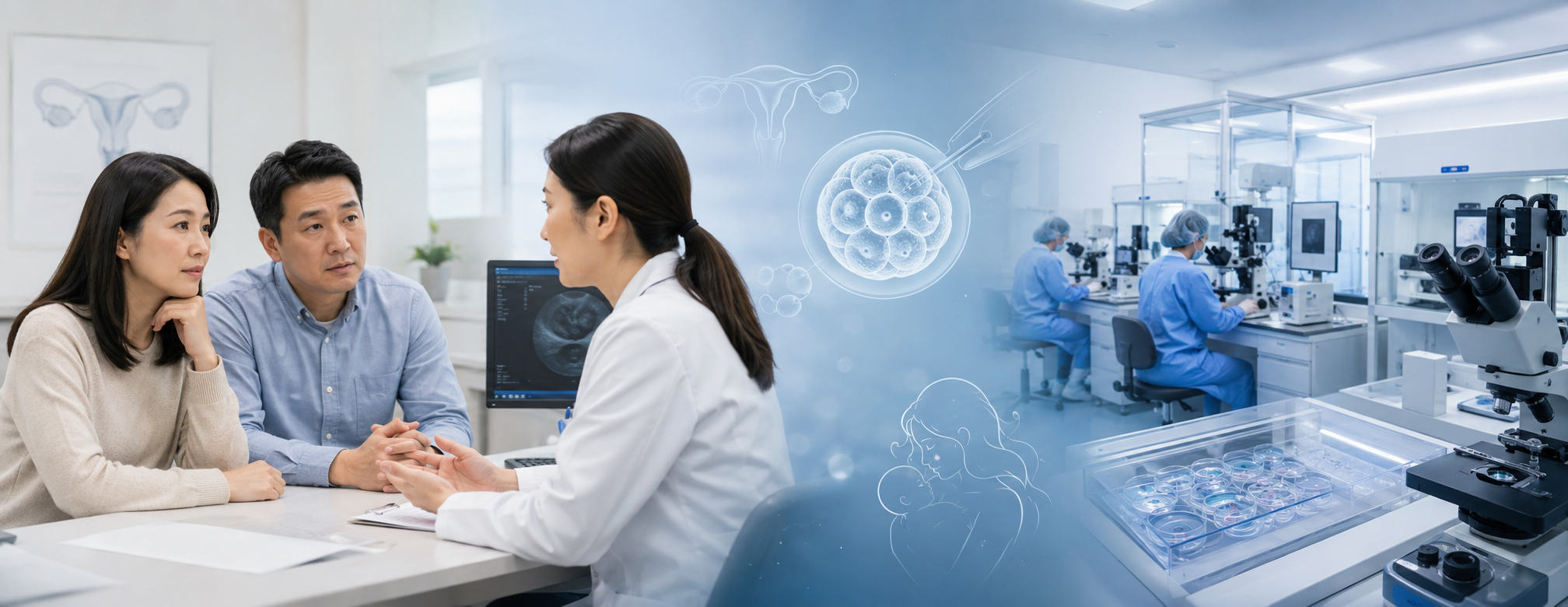
Detailed Guide to the Third-Generation IVF Process in Thailand
1、Preparation at Home and Remote Medical Assessment (Approx. 2–4 Weeks)
This stage can be completed in your home country, so there is no need to travel to Thailand in advance. The female partner generally undergoes AMH testing, a six-hormone panel, and a transvaginal ultrasound to assess the antral follicle count. The male partner undergoes a semen analysis. Both partners are also tested for infectious diseases and chromosomal abnormalities. Once the reports are available, they are sent to the hospital in Thailand. The doctor will review the results, determine whether the patient is suitable to begin a treatment cycle, and provide a preliminary treatment plan. Thailand offers visa-free entry to Chinese citizens, and the permitted length of stay is sufficient to cover a complete treatment cycle.
2、First Trip to Thailand — Ovarian Stimulation and Egg Retrieval (Approx. 12–15 Days)
The female partner usually arrives in Thailand on day 2 or 3 of her menstrual cycle. After arriving at the hospital, she will have an in-person consultation and repeat ultrasound and hormone tests. Once her condition is confirmed to be suitable, ovarian stimulation begins. Stimulation injections typically continue for about 8–12 days. During this period, regular hospital visits are required for ultrasound examinations and blood tests to monitor follicular development. When the follicles reach maturity, a trigger injection is administered, followed by egg retrieval approximately 36 hours later. Egg retrieval is performed under anesthesia and usually takes around 15–20 minutes. The male partner provides a semen sample at around the same time.
3、Embryo Culture and PGT Screening (Approx. 3–4 Weeks; You May Return Home While Waiting)
After egg retrieval, the eggs are fertilized with sperm in the laboratory. The resulting embryos are cultured until they reach the blastocyst stage on day 5 or 6. A key component of third-generation IVF is preimplantation genetic testing (PGT). A small number of cells are biopsied from each blastocyst for genetic testing, which may be used to assess the 23 pairs of chromosomes or to test for specific single-gene inherited disorders. The testing process generally takes about 7–15 working days. Embryos that meet the testing criteria are cryopreserved. During this waiting period, patients may return to their home country.
4、Second Trip to Thailand — Frozen Embryo Transfer (Approx. 5–7 Days)
Once the PGT results are available, embryos considered suitable for transfer can be identified. The female partner prepares the uterine lining according to the doctor's treatment plan. When the endometrium meets the required conditions, she travels to Thailand again. The selected embryo is thawed and transferred into the uterus. The transfer itself usually takes around 5–10 minutes, followed by approximately 1–2 hours of rest.
5、Pregnancy Confirmation and Return Home (10–14 Days After Transfer)
Around 10–14 days after embryo transfer, a blood pregnancy test is performed at a local hospital. Once the result is confirmed, the patient may return home, and subsequent pregnancy care can be continued domestically.
Overall, the third-generation IVF process in Thailand follows a step-by-step and well-established pathway, covering pre-treatment assessment, ovarian stimulation, embryo culture, genetic testing, embryo transfer, and post-transfer recovery. Together, these stages form a complete treatment pathway. If you are also interested in IVF treatment in Thailand, you may contact us for more information. We will explain the process in detail and provide support throughout your IVF journey as you work toward having a baby.